


















 Подарункові сертифікати
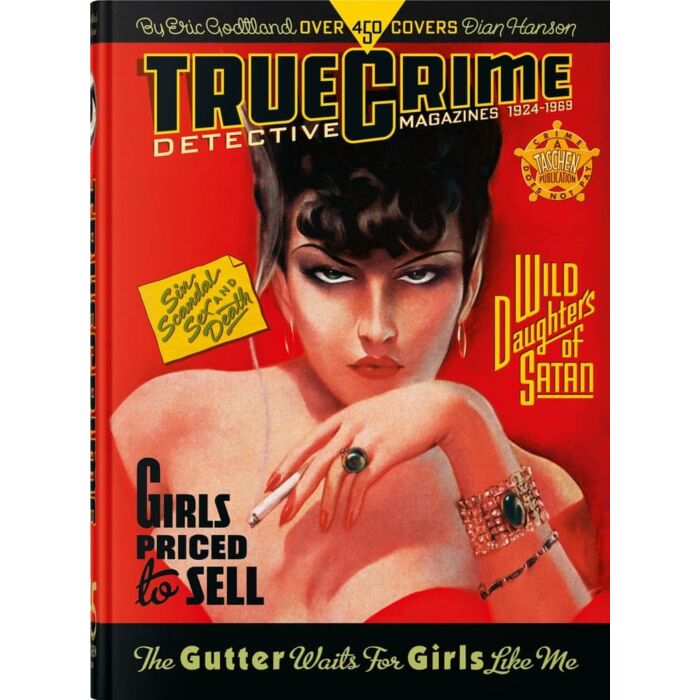
 True Crime Detective Magazines. 1924–1969
Паперова книга
В наявності

Special Price
1489₴
ціна
ЄКЛУБ
КРАЩА
ціна
Regular Price
2363₴

Доставка
від 0


Нова Пошта
від 0 до 69 грн
на відділення
69 грн
для замовлень від 799 грн
безкоштовно
в поштомат
65 грн
для замовлень від 599 грн
безкоштовно
Укрпошта
від 0 до 45 грн
на відділення
45 грн
для замовлень від 399 грн
безкоштовно
в поштомат
45 грн
для замовлень від 399 грн
безкоштовно
Meest Пошта
від 0 до 52 грн
на відділення
52 грн
для замовлень від 499 грн
безкоштовно
Оплата
Післяплата, карткою


Післяплата
на пошті при отриманні замовлення
Картою
оплата картою на сайті
Знижка 37%, встигни!
Залишилось:
| Автор | Eric Godtland |
|---|---|
| Видавництво | Taschen |
| Рік видання | 2026 |
| Мова | Англійська |
| Кількість сторінок | 512 |
| Обкладинка | Тверда |
| Вага | 1.115 |
| ISBN | 9783754402856 |
| Формат | 156x217xмм |
| Серія книг | 45th Edition |
| Тип | Паперова книга |
| Наявність ілюстрацій | Так |
| Перекладна | Ні |
Анотація "True Crime Detective Magazines. 1924–1969", Eric Godtland
Gun-toting femme fatales caught in the action!
At the height of the Jazz Age, when Prohibition was turning ordinary citizens into criminals and ordinary criminals into celebrities, America’s true crime detective magazines were born. True Detective came first in 1924, and by 1934, when the Great Depression had produced colorful outlaws like Machine Gun Kelly, Bonnie and Clyde, Baby Face Nelson, and John Dillinger, the magazines were so popular cops and robbers alike vied to see themselves on the pages. Even FBI boss J. Edgar Hoover wrote regularly for what came to be called the “Dickbooks,” referring to a popular slang term for a detective.
As the decades rolled on, the magazines went through a curious metamorphosis, however. When liquor was once more legal, the Depression over and all the flashy criminals dead or imprisoned, the “detectives” turned to sin to make sales. Sexy bad girls in tight sweaters, slit skirts, and stiletto heels adorned every cover.
At the height of the Jazz Age, when Prohibition was turning ordinary citizens into criminals and ordinary criminals into celebrities, America’s true crime detective magazines were born. True Detective came first in 1924, and by 1934, when the Great Depression had produced colorful outlaws like Machine Gun Kelly, Bonnie and Clyde, Baby Face Nelson, and John Dillinger, the magazines were so popular cops and robbers alike vied to see themselves on the pages. Even FBI boss J. Edgar Hoover wrote regularly for what came to be called the “Dickbooks,” referring to a popular slang term for a detective.
As the decades rolled on, the magazines went through a curious metamorphosis, however. When liquor was once more legal, the Depression over and all the flashy criminals dead or imprisoned, the “detectives” turned to sin to make sales. Sexy bad girls in tight sweaters, slit skirts, and stiletto heels adorned every cover.
Write Your Own Review
