


















 Подарункові сертифікати
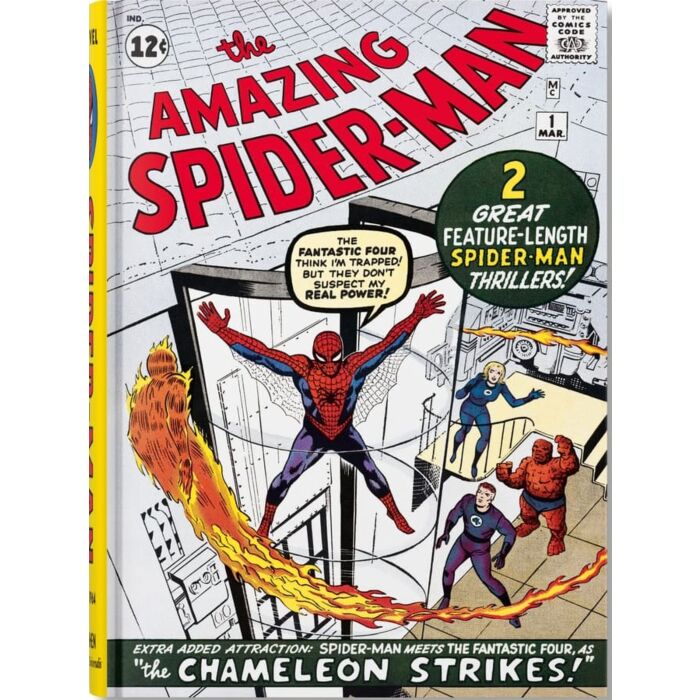
 Marvel Comics Library. Spider-Man. 1962–1964
Паперова книга
В наявності

Special Price
1219₴
ціна
ЄКЛУБ
КРАЩА
ціна
Regular Price
1934₴

Доставка
від 0


Нова Пошта
від 0 до 69 грн
на відділення
69 грн
для замовлень від 799 грн
безкоштовно
в поштомат
65 грн
для замовлень від 599 грн
безкоштовно
Укрпошта
від 0 до 45 грн
на відділення
45 грн
для замовлень від 399 грн
безкоштовно
в поштомат
45 грн
для замовлень від 399 грн
безкоштовно
Meest Пошта
від 0 до 52 грн
на відділення
52 грн
для замовлень від 499 грн
безкоштовно
Оплата
Післяплата, карткою


Післяплата
на пошті при отриманні замовлення
Картою
оплата картою на сайті
Знижка 37%, встигни!
Залишилось:
| Автор | Ralph Macchio, Стен Лі, Steve Ditko |
|---|---|
| Видавництво | Taschen |
| Рік видання | 2026 |
| Мова | Англійська |
| Кількість сторінок | 704 |
| Обкладинка | Тверда |
| Вага | 0.821 |
| ISBN | 9783836599504 |
| Формат | 140x195xмм |
| Серія книг | Bibliotheca Universalis |
| Тип | Паперова книга |
| Наявність ілюстрацій | Так |
| Перекладна | Ні |
Анотація "Marvel Comics Library. Spider-Man. 1962–1964", Ralph Macchio, Стен Лі, Steve Ditko
The origins of the teenager who broke the superhero mold.
When Stan Lee first pitched the idea of Spider-Man in 1962, his boss was full of objections: People hate spiders. Teenagers aren’t lead characters; they’re sidekicks. He should be glamorous and successful, not a friendless loser. But Stan persisted and Martin Goodman let him give the unlikely hero a tryout in Amazing Fantasy, which was already slated for cancellation. With Spider-Man on the cover, No. 15 shot to the top of Marvel’s best-seller list for the year, and the rest is history.
Amazing Spider-Man, which debuted seven months later, broke the comics mold. Peter Parker lived in uncool Queens, was always broke, continually worried about his Aunt May, was unlucky in love, and was constantly getting yelled at by his boss, Daily Bugle publisher J. Jonah Jameson. Spider-Man had the quips and confidence that Parker lacked, but learning to use his powers wasn’t always easy.
When Stan Lee first pitched the idea of Spider-Man in 1962, his boss was full of objections: People hate spiders. Teenagers aren’t lead characters; they’re sidekicks. He should be glamorous and successful, not a friendless loser. But Stan persisted and Martin Goodman let him give the unlikely hero a tryout in Amazing Fantasy, which was already slated for cancellation. With Spider-Man on the cover, No. 15 shot to the top of Marvel’s best-seller list for the year, and the rest is history.
Amazing Spider-Man, which debuted seven months later, broke the comics mold. Peter Parker lived in uncool Queens, was always broke, continually worried about his Aunt May, was unlucky in love, and was constantly getting yelled at by his boss, Daily Bugle publisher J. Jonah Jameson. Spider-Man had the quips and confidence that Parker lacked, but learning to use his powers wasn’t always easy.
Write Your Own Review
