






 Сертифікати
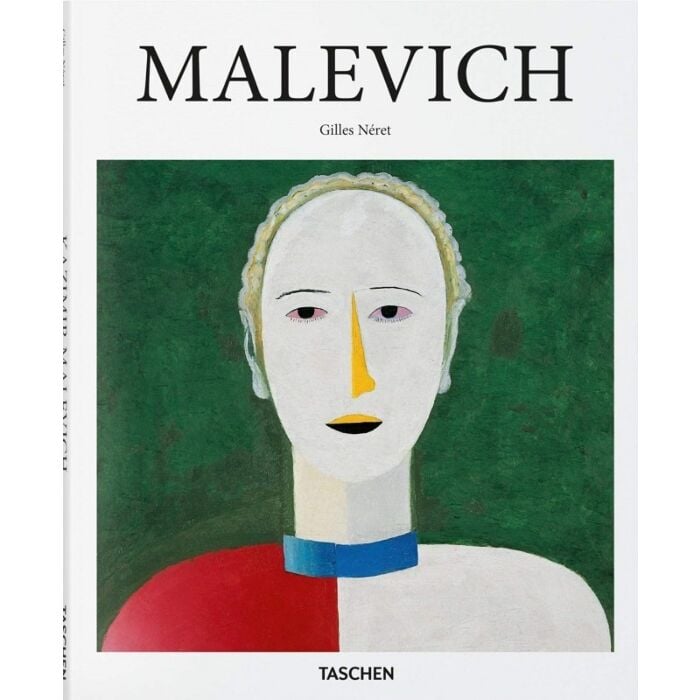
 Malevich
Паперова книга
В наявності

Special Price
899₴
ціна
ЄКЛУБ
КРАЩА
ціна
Regular Price
1605₴

Доставка
від 0


Нова Пошта
від 0 до 69 грн
на відділення
69 грн
для замовлень від 799 грн
безкоштовно
в поштомат
65 грн
для замовлень від 599 грн
безкоштовно
Укрпошта
від 0 до 45 грн
на відділення
45 грн
для замовлень від 399 грн
безкоштовно
в поштомат
45 грн
для замовлень від 399 грн
безкоштовно
Meest Пошта
від 0 до 52 грн
на відділення
52 грн
для замовлень від 499 грн
безкоштовно
Оплата
Післяплата, карткою


Післяплата
на пошті при отриманні замовлення
Картою
оплата картою на сайті
Знижка 44%, встигни!
Залишилось:
| Автор | Gilles Néret |
|---|---|
| Видавництво | Taschen |
| Рік видання | 2015 |
| Мова | Англійська |
| Кількість сторінок | 96 |
| Обкладинка | Тверда |
| ISBN | 9783836546393 |
| Формат | 210x260x13мм |
| Серія книг | Basic Art |
| Тип | Паперова книга |
| Наявність ілюстрацій | Так |
| Перекладна | Ні |
Анотація "Malevich", Gilles Néret
After flirtations with Realism, Impressionism, and Symbolism, Kiev-born Kazimir Malevich (1878–1935) found his métier in dissolving literal, representational figures and landscapes into pure emotionally-charged abstraction. In 1915, he created what is widely lauded as the first and ultimate abstract artwork: Black Square, a black rectangle on a white background, hailed as the “zero point of painting,” a seminal moment for modern and abstract practice.
In this book, we follow Malevich’s key innovations and ideas and place his groundbreaking achievements within the context of both the Russian and global avant-garde. Through rich illustrations of his work, we explore the artist’s theory of Suprematism, based on severe geometric abstraction and “the supremacy of pure feeling in creative art”; his leading role in the development of Constructivism; as well as his interests in philosophy, literature, Russian folk art, and the fourth dimension.
In this book, we follow Malevich’s key innovations and ideas and place his groundbreaking achievements within the context of both the Russian and global avant-garde. Through rich illustrations of his work, we explore the artist’s theory of Suprematism, based on severe geometric abstraction and “the supremacy of pure feeling in creative art”; his leading role in the development of Constructivism; as well as his interests in philosophy, literature, Russian folk art, and the fourth dimension.
Write Your Own Review
