


















 Подарункові сертифікати
Ethics (Wordsworth Classics of World Literature)
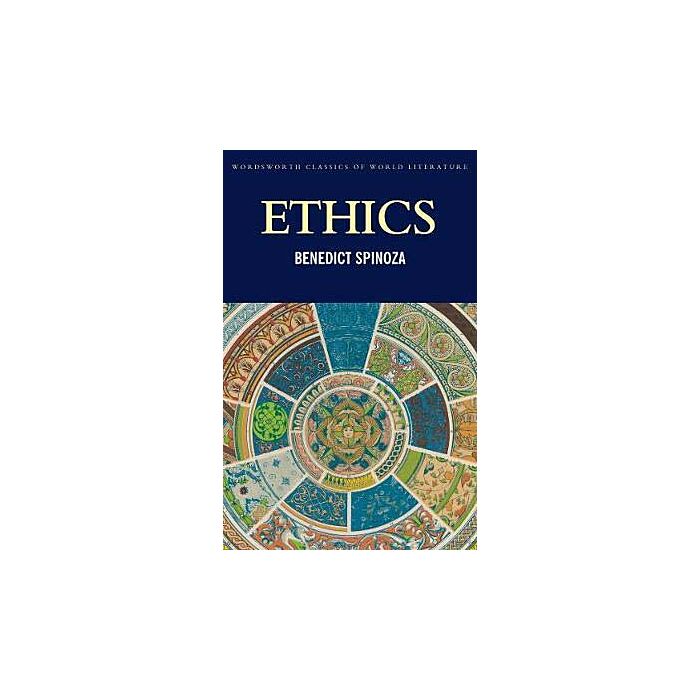
Паперова книга
Немає в наявності
Special Price
192₴
ціна
ЄКЛУБ
КРАЩА
ціна
Regular Price
270₴

Доставка
від 0


Нова Пошта
від 0 до 80 грн
на відділення
80 грн
для замовлень від 899 грн
безкоштовно
в поштомат
80 грн
для замовлень від 699 грн
безкоштовно
Укрпошта
від 0 до 55 грн
на відділення
55 грн
для замовлень від 499 грн
безкоштовно
в поштомат
55 грн
для замовлень від 499 грн
безкоштовно
Meest Пошта
від 0 до 55 грн
на відділення
55 грн
для замовлень від 499 грн
безкоштовно
Оплата
Післяплата, карткою


Післяплата
на пошті при отриманні замовлення
Картою
оплата картою на сайті
| Автор | Бенедикт Спиноза |
|---|---|
| Видавництво | Wordsworth Editions |
| Перекладач | W.H.White |
| Рік видання | 2001 |
| Мова | Англійська |
| Кількість сторінок | 368 |
| Обкладинка | М'яка |
| Вага | 0.261 |
| ISBN | 9781840221190 |
| Формат | 126x196x20мм |
| Серія книг | Wordsworth Classics of World Literature |
| Тип | Паперова книга |
| Наявність ілюстрацій | Ні |
| Перекладна | Так |
Анотація "Ethics (Wordsworth Classics of World Literature)", Бенедикт Спиноза
Benedict de Spinoza lived a life of blameless simplicity as a lens-grinder in Holland. And yet in his lifetime he was expelled from the Jewish community in Amsterdam as a heretic, and after his death his works were first banned by the Christian authorities as atheistic, then hailed by humanists as the gospel of Pantheism.
His Ethics Demonstrated in Geometrical Order shows us the reality behind this enigmatic figure. First published by his friends after his premature death at the age of forty-four, the Ethics uses the methods of Euclid to describe a single entity, properly called both 'God' and 'Nature', of which mind and matter are two manifestations. From this follow, in ways that are strikingly modern, the identity of mind and body, the necessary causation of events and actions, and the illusory nature of free will.
His Ethics Demonstrated in Geometrical Order shows us the reality behind this enigmatic figure. First published by his friends after his premature death at the age of forty-four, the Ethics uses the methods of Euclid to describe a single entity, properly called both 'God' and 'Nature', of which mind and matter are two manifestations. From this follow, in ways that are strikingly modern, the identity of mind and body, the necessary causation of events and actions, and the illusory nature of free will.
Write Your Own Review
